
Formally constituted under Act XV of 1920 by the Indian Legislature, transforming wartime medical relief into an enduring national peacetime movement of humanitarian care.
Statutory Genesis & Historical Milestones
The Indian Red Cross Society (IRCS) was officially founded in 1920. Its origins stem from the aftermath of the First World War and the visionary decision to repurpose wartime medical aid, personnel, and resources into an organized, permanent peacetime humanitarian institution.
During World War I, medical relief for wounded Indian and Allied soldiers was coordinated jointly by the Order of St. John of Jerusalem and the British Red Cross Society through the Joint War Committee (Indian Branch), collecting life-saving medical supplies and voluntary donations.
Upon the conclusion of the war, substantial surplus funds and assets remained. To channel these resources into civilian healthcare and disaster alleviation, Sir Claude Hill (Member of the Viceroy’s Executive Council) introduced a dedicated legislative bill in the Imperial Legislative Council.
The Indian Legislature formally passed the Indian Red Cross Society Act (Act XV of 1920), constituting the IRCS as an independent, statutory national humanitarian society under the patronage of the Head of State.
All wartime assets, administrative divisions, and relief endowments were formally transferred to the Indian Red Cross Society. Sir Claude Hill took charge as its first Chairman.
The IRCS achieved full statutory recognition from the International Committee of the Red Cross (ICRC) in Geneva and became an integral voting member of the International Federation of Red Cross and Red Crescent Societies (IFRC).
Foundation Charter & Archival Record
Archive Doc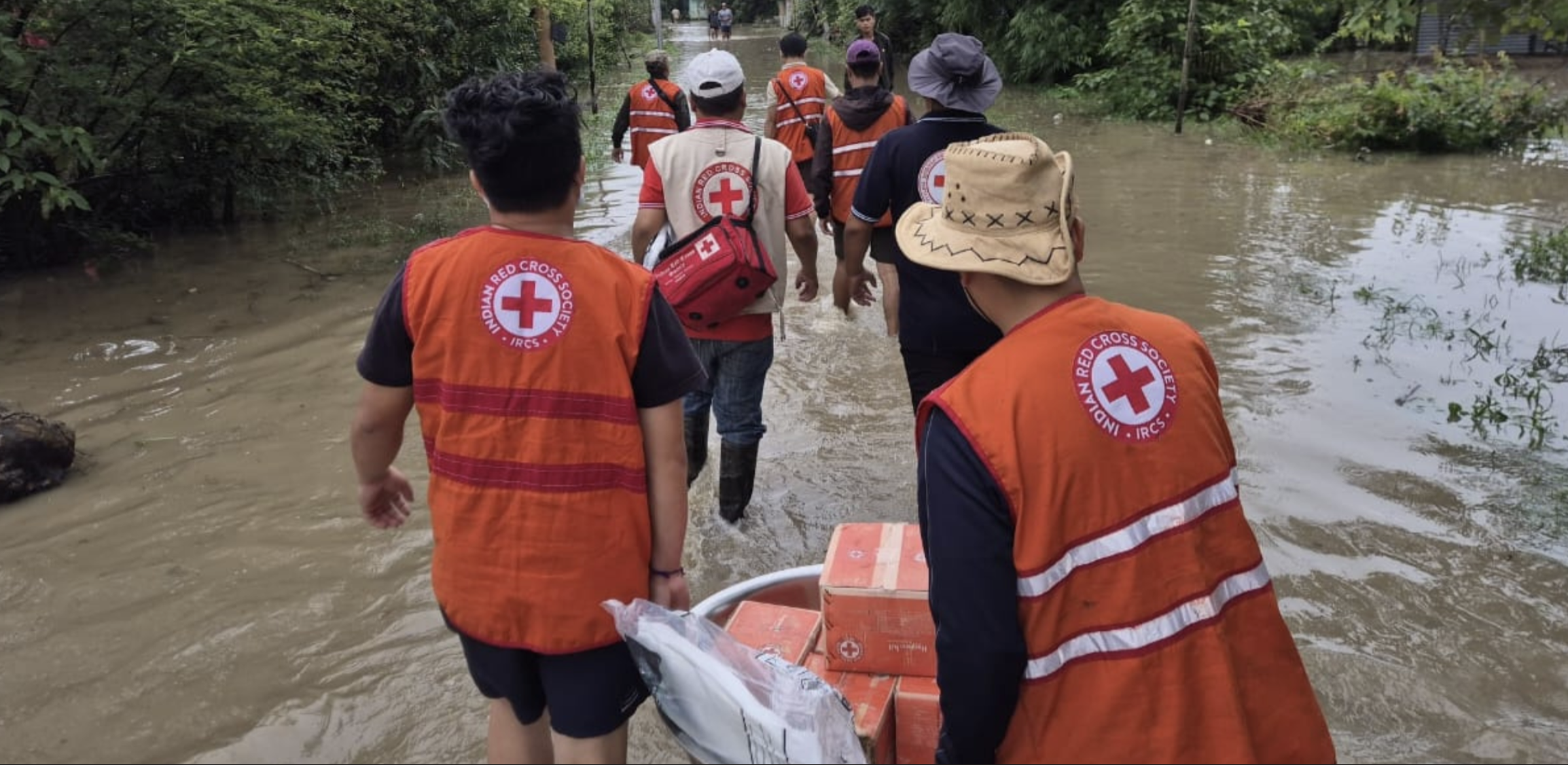
Foundation of Indian Red Cross Society (Act XV of 1920)
The 4 Core Humanitarian Pillars
The mission and operations of the Indian Red Cross Society are structured around four strategic core programmatic domains:
1. Humanitarian Principles & Values
Championing the 7 Fundamental Principles (Humanity, Impartiality, Neutrality, Independence, Voluntary Service, Unity, Universality) to cultivate respect and non-violence.
2. Disaster Response & Mitigation
Deploying rapid on-ground humanitarian relief, search & rescue support, emergency shelter, and family food kits during floods, earthquakes, and civil calamities.
3. Disaster Preparedness
Empowering vulnerable communities with disaster awareness, early warning flood alerts, volunteer mobilization drills, and emergency contingency stockpiles.
4. Health & Community Care
Extending equitable public health interventions including maternal and child health camps, TB nutrition support, and disease prevention initiatives across marginalized areas.